New York City truck accident lawyer
In 2025, 6,235 crashes on New York City streets involved a large truck: 3,219 people were hurt and 28 were killed. If you are one of them, the rules that decide your claim changed this year. A free case review with The Cochran Firm New York tells you where you stand.
- Office at 17 State Street, 14th Floor, Manhattan, matched to the right lawyer for your crash
- Hit by a city-owned truck or bus? A written notice is due within 90 days. See why
- No fee unless you win
The Cochran Firm New York
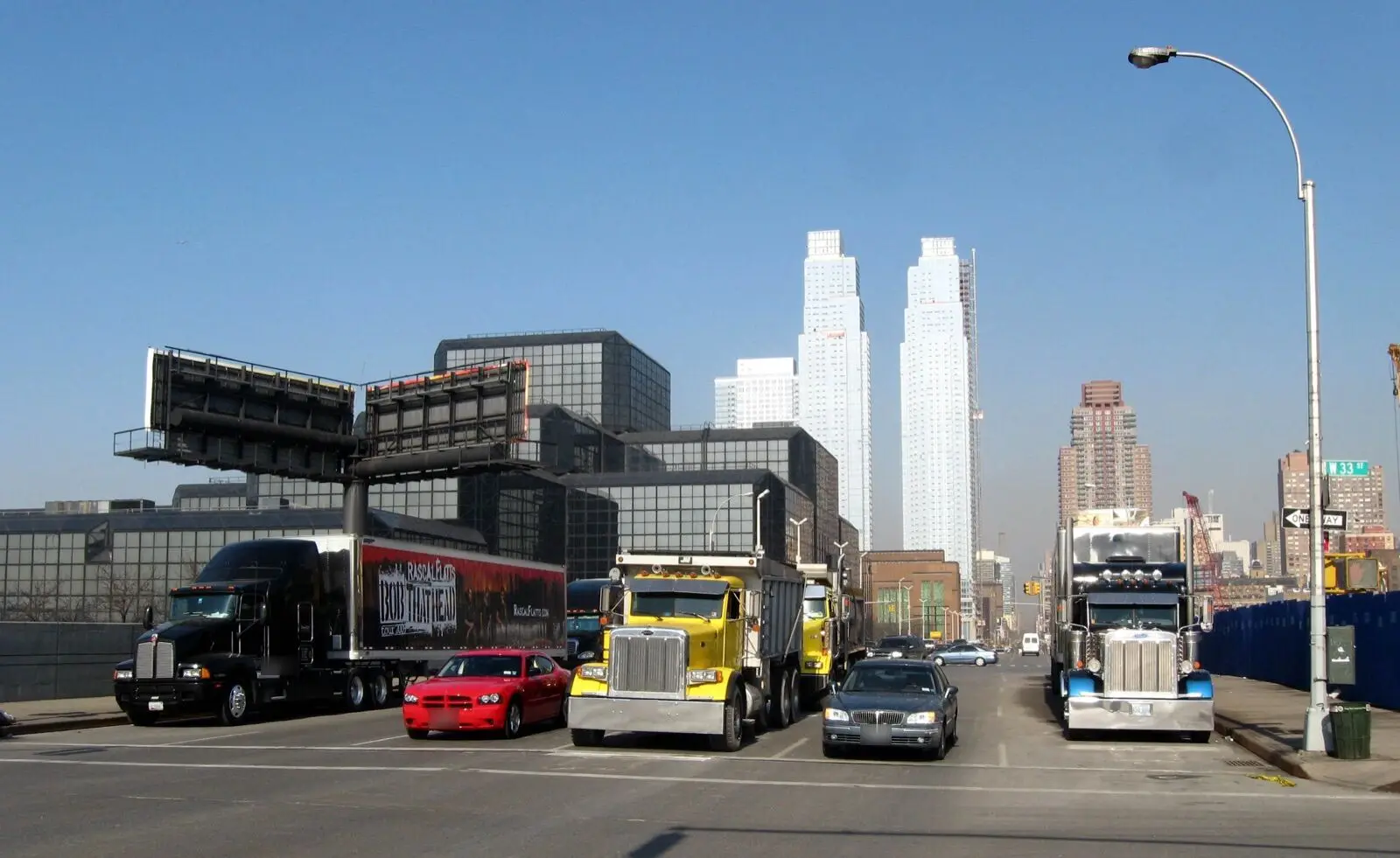
Truck crashes in New York City, 2025
These numbers come from the NYPD's own crash reports, published on NYC Open Data. We counted every 2025 crash where at least one vehicle was recorded as a large truck.
Large trucks were in 7.3% of the city's 85,559 recorded crashes, but 12.2% of its 229 traffic deaths. Box trucks, the kind used for deliveries and moves, were in 3,177 of the truck crashes, just over half.
| Borough | Crashes | Injured | Killed |
|---|---|---|---|
| Brooklyn | 2,056 | 878 | 10 |
| Manhattan | 1,213 | 347 | 5 |
| Queens | 1,213 | 805 | 5 |
| Bronx | 1,021 | 742 | 5 |
| Staten Island | 112 | 27 | 0 |
| Borough not recorded | 620 | 420 | 3 |
Source: NYPD Motor Vehicle Collisions, NYC Open Data dataset h9gi-nx95, crash dates 1 January to 31 December 2025, pulled 7 November 2026. “Large truck” means a vehicle recorded as: box truck, tractor truck (diesel), tractor truck (gasoline), dump, garbage or refuse, flat bed, tanker, concrete mixer, chassis cab, refrigerated van, beverage truck, flat rack, stake or rack, armored truck. Crashes without a recorded borough are shown on their own line.
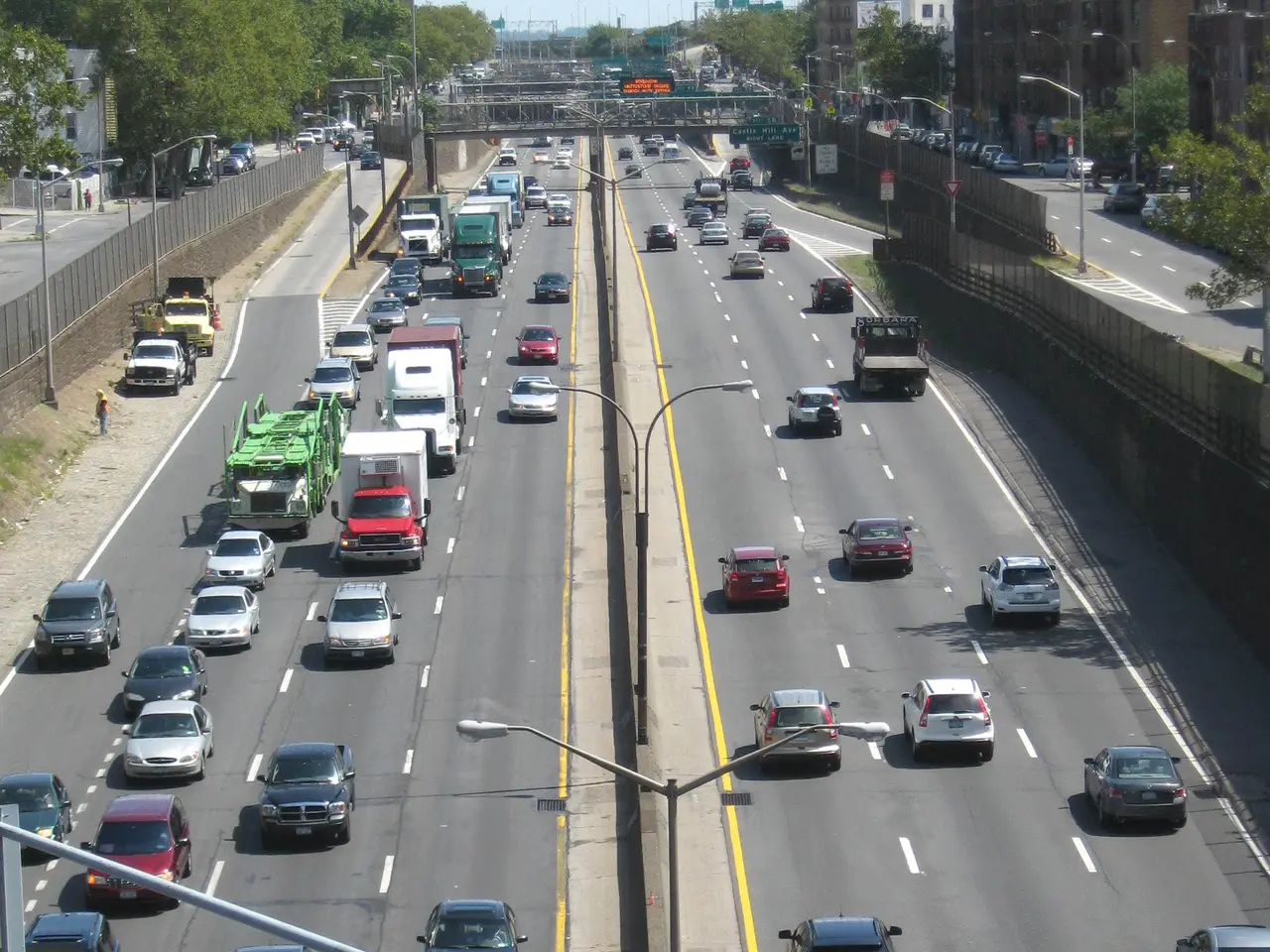
What police reports blame in city truck crashes
For each vehicle in a crash, the police can record what contributed to it. Where they recorded a cause against a truck in 2025, the most common by far was “Driver Inattention/Distraction”: 1,105 of 3,625 trucks, or 30.5%.
| Cause, in the NYPD's words | Trucks | Share |
|---|---|---|
| Driver Inattention/Distraction | 1,105 | 30.5% |
| Following Too Closely | 339 | 9.4% |
| Passing Too Closely | 317 | 8.7% |
| Passing or Lane Usage Improper | 248 | 6.8% |
| Backing Unsafely | 247 | 6.8% |
| Other Vehicular | 202 | 5.6% |
| Turning Improperly | 183 | 5.0% |
| Oversized Vehicle | 176 | 4.9% |
Source: NYPD Motor Vehicle Collisions, NYC Open Data dataset h9gi-nx95, 2025, pulled 7 November 2026. For each of the 6,429 trucks in a 2025 crash we counted the cause the police recorded for that vehicle. 2,804 had no stated cause (“Unspecified”, “Does Not Apply” or blank); shares are of the 3,625 that had one.
Each of these causes points to evidence worth keeping:
- Distraction: the driver's phone records and any camera facing the driver.
- Following or passing too closely, or improper lane use: forward-facing camera video and the truck's engine data on speed and braking.
- Backing or turning: any camera covering the truck's blind spots, and the company's training records for the driver.
The firm's lawyers check the police report against that evidence.
Who gets hurt in city truck crashes, and how
Of the 3,219 people injured in 2025 crashes involving a large truck, 2,991 were in a vehicle, 106 were on foot, 68 were on a bicycle and 54 were recorded as on another motorized vehicle. Of the 28 people killed, 15 were on foot.
| Body part, in the NYPD's words | People | Share |
|---|---|---|
| Back | 720 | 23.4% |
| Neck | 664 | 21.6% |
| Head | 380 | 12.3% |
| Knee-Lower Leg Foot | 358 | 11.6% |
| Shoulder - Upper Arm | 308 | 10.0% |
| Entire Body | 288 | 9.4% |
| Elbow-Lower-Arm-Hand | 146 | 4.7% |
These are injuries as written on the police report at the scene. For the 3,064 injured people with an injury type recorded, the report says “Complaint of Pain or Nausea” for 2,016 (65.8%) and “Fracture - Distorted - Dislocation” for 24. What counts for a pain-and-suffering claim is the injury your medical records show, measured against New York's “serious injury” list in Insurance Law § 5102(d).
Source: NYPD Motor Vehicle Collisions, person records (NYC Open Data f55k-p6yu) joined to the crash records (h9gi-nx95), 2025, pulled 7 November 2026. Shares are of the 3,078 injured people with a body part recorded; “Does Not Apply”, “Unknown”, “Unspecified” and blank are left out.
New York law changed in 2026
On May 26, 2026, New York signed a budget law (Chapter 58 of the Laws of 2026) that changed two rules that truck crash injury claims in the state run on.
1. If you were more at fault than the other side, you can no longer recover
For decades New York let an injured person recover even if they were mostly at fault; their award was only reduced by their share. For injury claims covered by New York's no-fault law, the new subsection (b) of CPLR 1411 now says your own fault “shall bar recovery” if it is greater than the fault of the person you sue, or greater than the combined fault of everyone you sue.
The trucking company's first move is often to blame you: a lane change, a blind spot, speed. Under the new rule, that argument can end a claim, not just shrink it. The new rule applies to lawsuits started on or after May 26, 2026, so the date your case is filed matters, not only the date of the crash.
2. The “90 out of 180 days” injury category is gone
To sue for pain and suffering after a crash covered by no-fault, your injury has to count as a “serious injury” under Insurance Law § 5102(d). The 2026 law removed the category that covered injuries keeping you from your usual daily activities for 90 of the first 180 days. The list that remains: death, dismemberment, significant disfigurement, a fracture, loss of a fetus, permanent loss of use of a body organ, member, function or system, permanent consequential limitation of use of a body organ or member, or significant limitation of use of a body function or system. Like the fault rule, this change applies to lawsuits started on or after May 26, 2026 (Part EE, § 4).
Medical records that document the injury in those terms matter more now than before. The firm's lawyers will tell you how both changes apply to your case.
Deadlines in New York
Miss one of these and the claim can be lost, however strong it is.
- 3 years
To sue for your injuries after a crash with a privately owned truck (CPLR § 214(5)).
- 2 years
From the date of death, for a family to bring a wrongful death claim (EPTL § 5-4.1).
- 90 days
To serve a written, sworn notice of claim when the truck or bus belongs to a city, county or public authority (General Municipal Law § 50-e).
- 1 year and 90 days
To file the lawsuit itself in those public-vehicle cases (General Municipal Law § 50-i).
When the truck or bus belongs to the city
A claim against a city, county or public authority starts with a notice of claim, served within 90 days of the crash. In a wrongful death case the 90 days run from the appointment of the estate's representative. A court can allow a late notice, but never beyond the deadline to sue.
Claims involving New York City Transit or the MTA have their own sections of the Public Authorities Law (§ 1212 and § 1276). One subsection of § 1212 allows as little as one year to sue, so treat any public-vehicle crash as urgent and let the firm's lawyers confirm which deadline applies.

No-fault pays first, and what it does not cover
New York is a no-fault state: after a crash, no-fault insurance pays “basic economic loss” whoever caused it. Under Insurance Law § 5102(a) that is up to $50,000 per person, covering:
- medical and rehabilitation bills;
- lost earnings, up to $2,000 a month for up to three years;
- other reasonable and necessary expenses, up to $25 a day for up to one year.
A serious truck crash often costs far more than $50,000, and no-fault pays nothing for pain and suffering. The difference is claimed from the truck's owner and driver, which is where the serious-injury list and the new fault rule above come in.
Who can be responsible, and what you can claim
Who can be responsible
- The driver.
- The trucking company that employed the driver.
- The truck's owner, if that is a different company. Under Vehicle and Traffic Law § 388(1), the owner of a vehicle is liable for injuries caused by the negligence of anyone driving it with the owner's permission.
- Depending on the facts, the broker that arranged the load, the shipper that loaded the trailer, or the contractor that maintained the truck.
- A city, county or public authority, if it owned the truck or bus. The 90-day notice rule applies.
What you can claim
- From no-fault: basic economic loss, up to $50,000, whoever was at fault (Insurance Law § 5102(a)).
- From those responsible: your financial losses beyond what no-fault pays, such as medical costs and lost earnings above its limits.
- Pain and suffering, but only for a “serious injury”. Insurance Law § 5104(a) allows no recovery for non-economic loss “except in the case of a serious injury.”
- For a death: a wrongful death claim by the family, brought within two years of the death (EPTL § 5-4.1).
No-fault benefits are paid whoever was at fault. Amounts claimed from those responsible are reduced by your share of the fault (CPLR § 1411), and for injury lawsuits started on or after May 26, 2026, barred if your share is greater than theirs.
The trucking company's records, and how long they keep them
Federal rules for interstate trucking companies decide what evidence exists after a crash, and for how long. The shortest clock is six months.
- 6 months
Drivers' hours-of-service logs and supporting documents (49 CFR § 395.8(k)), and the back-up copy of electronic logging device data (49 CFR § 395.22(i)).
- 1 year
Inspection, repair and maintenance records for each truck, and for 6 months after the truck leaves the company (49 CFR § 396.3(c)).
- 3 years
After the driver leaves, the driver's qualification file: licence, medical certificate, road test and driving record (49 CFR § 391.51).
The logs show whether the driver broke the federal limits in 49 CFR § 395.3: no more than 11 hours of driving, nothing after the 14th hour on duty, a 30-minute break after 8 hours of driving, and no driving after 60 hours in 7 days or 70 hours in 8 days until a 34-hour restart. A preservation letter from a lawyer puts the company on notice to keep all of it, along with dashcam video and the truck's engine data.
Insurance matters too. A for-hire trucking company hauling general freight across state lines in a truck of 10,001 pounds or more must carry at least $750,000 in liability cover. Oil and hazardous materials carriers need $1,000,000, and certain bulk hazardous loads $5,000,000 (49 CFR § 387.9).
Look up the trucking company yourself
- Find the USDOT number. It is painted on both cab doors, often next to the company name.
- Open the federal SAFER Company Snapshot and search by USDOT number or company name.
- The snapshot shows whether the company is authorised to operate, how many trucks and drivers it runs, and its inspections, out-of-service rates and reported crashes for the last 24 months.
Write the number down even if you do nothing else with it. It is the fastest way for a lawyer to find the carrier.
How The Cochran Firm New York handles a city truck case
Your case review goes to the firm's office at 17 State Street, 14th Floor, Manhattan. The office matches it to the lawyer best suited to your kind of crash, who calls you back within 1 to 3 hours. If the firm takes the case, the first steps are the preservation letter, the carrier's federal record and, for a city vehicle, the notice of claim.
Hit by a delivery van or box truck? Read the delivery truck page on who employs the driver.
Questions people ask after a New York City truck crash
How long do I have to sue after a truck accident in New York City?
Three years from the crash to sue for your injuries when the truck is privately owned (CPLR § 214(5)). Two years from the death for a family’s wrongful death claim (EPTL § 5-4.1). If a city, county or public authority owned the truck or bus, a sworn notice of claim is due within 90 days and the lawsuit within one year and 90 days (General Municipal Law §§ 50-e and 50-i).
What should I do in the first days after a truck crash?
Get medical care and keep every record. Photograph the truck’s USDOT number and plate, or write them down. Within 30 days, give written notice to the no-fault insurer; a later notice needs a clear, reasonable written explanation for the delay (11 NYCRR § 65-1.1). If you were driving, New York also requires a written report to the DMV within 10 days when anyone is hurt or one person’s property damage is over $1,000 (Vehicle and Traffic Law § 605).
Who pays my medical bills right after the crash?
No-fault insurance pays first, whoever caused the crash: up to $50,000 per person for medical bills, lost earnings of up to $2,000 a month for up to three years, and other reasonable expenses (Insurance Law § 5102(a)). Proof of medical bills is due within 45 days of each treatment, and proof of lost earnings within 90 days (11 NYCRR § 65-1.1).
Can I still recover if I was partly at fault?
Your award is reduced by your share of the fault (CPLR § 1411). For injury lawsuits started on or after May 26, 2026 over crashes covered by no-fault, you recover nothing if your share of the fault is greater than that of the person you sue, or greater than the combined fault of everyone you sue (CPLR § 1411(b)).
Do I need a “serious injury” to sue a trucking company?
To claim for pain and suffering, yes (Insurance Law § 5104(a)). The injury must fit the list in Insurance Law § 5102(d), such as a fracture, significant disfigurement or a significant limitation of use of a body function or system. For lawsuits started on or after May 26, 2026, the “90 of the first 180 days” category no longer counts. Financial losses above what no-fault pays can be claimed without a serious injury.
Who can be held responsible for a truck crash?
The driver; the company that employed the driver; and the truck’s owner if that is a different company, because Vehicle and Traffic Law § 388(1) makes an owner liable for a permitted driver’s negligence. Depending on the facts, also the broker that arranged the load, the shipper that loaded it, the company that maintained the truck, or a city, county or public authority that owned it.
How do I check a trucking company’s safety record?
Find the USDOT number painted on the cab doors and search it in the federal SAFER Company Snapshot. It shows whether the company is authorised to operate, how many trucks and drivers it runs, and its inspections, out-of-service rates and reported crashes for the last 24 months.
How much insurance does a trucking company have to carry?
A for-hire company hauling general freight across state lines in a truck of 10,001 pounds or more must carry at least $750,000 in liability cover. Oil and hazardous materials carriers need $1,000,000, and certain bulk hazardous loads $5,000,000 (49 CFR § 387.9).
Sources
Every rule and number on this page comes from these sources, read on 7 November 2026:
- NYPD Motor Vehicle Collisions – Crashes (NYC Open Data, h9gi-nx95)
- NYPD Motor Vehicle Collisions – Person (NYC Open Data, f55k-p6yu)
- N.Y. CPLR § 1411(b): the 2026 fault bar in motor vehicle injury cases
- Senate Bill S9008-C (2025–2026), Part EE: signed May 26, 2026 as Chapter 58
- N.Y. Insurance Law § 5102: no-fault benefits and the meaning of “serious injury”
- N.Y. Insurance Law § 5104(a): when you can sue for pain and suffering
- N.Y. Vehicle and Traffic Law § 388: the owner is responsible for a permitted driver’s negligence
- N.Y. CPLR § 214(5): three years to sue for personal injury
- N.Y. EPTL § 5-4.1: two years to bring a wrongful death claim
- N.Y. General Municipal Law § 50-e: 90-day notice of claim
- N.Y. General Municipal Law § 50-i: one year and 90 days to sue
- N.Y. Public Authorities Law § 1212: claims against New York City Transit
- N.Y. Public Authorities Law § 1276: claims against the MTA
- 11 NYCRR § 65-1.1: no-fault notice within 30 days; proof of bills within 45 and 90 days
- N.Y. Vehicle and Traffic Law § 605: a driver’s written crash report within 10 days
- 49 CFR § 395.3: driving-hour limits for truck drivers
- 49 CFR § 395.8: drivers’ records of duty status, kept 6 months
- 49 CFR § 395.22: electronic logging device back-ups, kept 6 months
- 49 CFR § 396.3: inspection and maintenance records
- 49 CFR § 391.51: driver qualification files
- 49 CFR § 387.9: minimum insurance for trucking companies
- FMCSA SAFER Company Snapshot: look up a trucking company by USDOT number
This page is general information about New York law, not legal advice for your case.